If you run Local Services Ads, your dashboard is about to disappear.

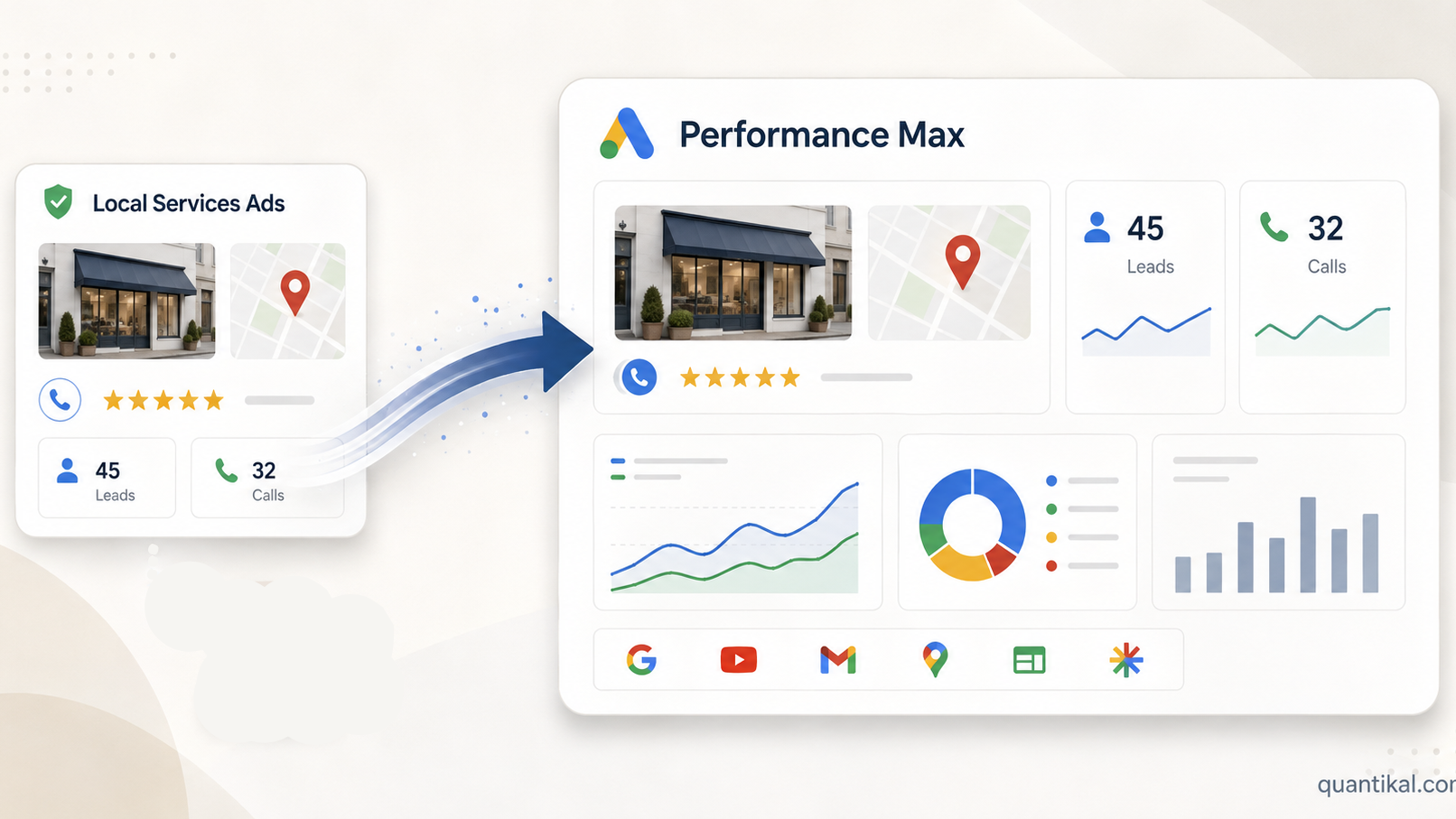
Starting this month, LSAs move out of their standalone dashboard and into a new “Performance Max for pay-per-lead” campaign type. If you run local services, this is worth knowing before it happens to your account.

What stays the same:

→ Ads only show on Search and Maps

→ Still keywordless, driven by your Google Business Profile

→ Still pay-per-lead, not pay-per-click

What’s new:

→ One dashboard for campaigns, leads, and calls instead of a separate LSA interface

→ Your Google Business Profile updates sync to your ads automatically

The part worth flagging: your historical performance data does not migrate with you. If you’ve been running LSAs and want to keep that reporting history, you’ll need to export it before your account transitions.

The timeline depends on your account, but broadly:
August 2026: U.S. home and storefront service businesses started migrating
Late 2026: Broader U.S. advertiser groups follow, including service-area businesses
2027: The transition expands to non-U.S. accounts and remaining categories

Another Google product getting pulled into the same unified dashboard. 

The dashboard gets simpler. Just don’t forget to export your data before your account transitions.

If you’re running Local Services Ads, is anyone on your team exporting that historical data before the migration hits?

Source: https://searchengineland.com/

Search just got its biggest redesign in 25 years.

The way people search has changed, and Google answered with 4 new ad formats.

At Google Marketing Live this year, Google announced a new generation of ad formats built exclusively for AI Mode:

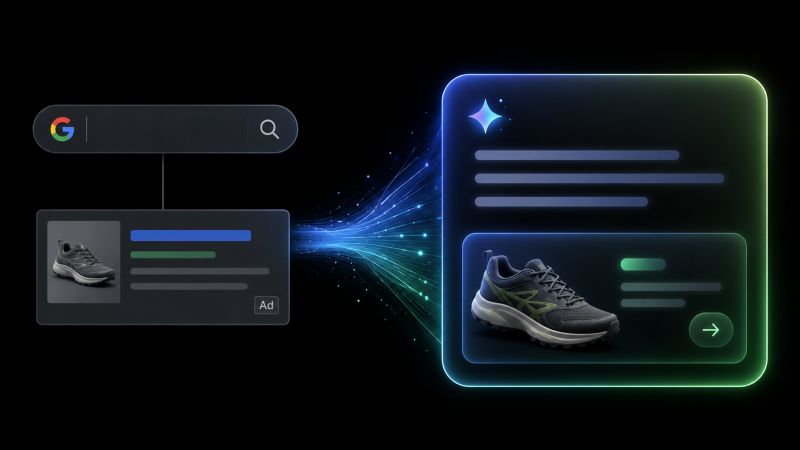
→ Conversational ads: woven into AI Mode’s response in natural language, based on your assets and brand guidelines. Not a banner. An answer.

→ Direct Offers: personalized discounts and bundles surfaced mid-conversation, at peak buying intent. Gemini builds the offer dynamically from your promotional rules.

→ AI-powered Shopping ads: Gemini-written copy that explains why that product answers the query — not just shows it.

→ Business Agent for Leads: the user asks the ad a question. The ad answers using your site content and pre-fills the contact form.

These formats exist because Search has fundamentally changed. Google made it official at GML: AI Mode now has 1B+ monthly users, searches are 3x longer than traditional queries, and usage has been doubling every quarter. The search box itself got its biggest redesign in 25 years: built for full sentences, not keyword fragments.

Google’s own words: “You can’t think in simple keywords anymore.”

One thing worth knowing: access to all of these requires AI Max or PMax, because they’re built for a different kind of search entirely. Longer queries, higher intent, conversational context. If you’re already running either, these placements are available to you now. If not, that’s the gap worth closing first.

Which of these new formats are you most excited to test?

ChatGPT Ads hit $100M in revenue in 6 weeks.

ChatGPT Ads hit $100M (yearly run rate) in revenue in 6 weeks. From less than 20% of eligible users.

Let that sink in. OpenAI has 600+ advertisers on the platform, self-serve access opening this month, and a runway that’s barely been touched.

This isn’t a curiosity anymore.
Here’s what the numbers actually mean 👇
85% of Free and Go tier users are eligible to see ads. Only 20% are currently seeing them. The $100M is essentially the proof of concept before the real rollout begins.

When self-serve opens up in April, this stops being an invite-only experiment and becomes a channel any advertiser can buy. CPMs are reportedly around $60. Minimum commitments drop. The herd arrives.

Should you care right now?
If you are in e-commerce, DTC, or any considered-purchase category — yes.
ChatGPT users aren’t scrolling. They’re actively asking, comparing, and deciding. That’s a different kind of intent than a banner ad or even a Google search. It’s closer to intercepting someone mid-conversation than mid-browse.

The format is still rough. Reporting is thin. Scale is limited outside the US for now. No one has written case studies yet.

But that’s exactly when it’s worth paying attention — before the platform matures, CPMs inflate, and everyone’s fighting over the same inventory.
We’re watching this one closely.

What’s your take — is ChatGPT ads a real channel in 2026, or still too early to justify budget?

Organic Search Traffic Down 2.5% YoY (U.S.)

“SEO is dead” is the new “email is dead.” Still wrong. Still loud. Still getting engagement.

New large-scale data (40,000+ US sites, Similarweb + GSC validation) tells a much less dramatic story than X threads would have you believe:

  • Organic search traffic is down just 2.5% YoY
  • Not 25%. Not 60%. Not an extinction event
  • Google says organic clicks are stable YoY — data backs it up

If AI overview was supposed to nuke search, it’s… taking its time.

Where the pain actually is 👇

SEO didn’t collapse. It redistributed.

  • The very largest sites grew ~+1.6%
  • The biggest declines hit mid-tier publishers (Top 100–10,000)
  • Translation: scale + brand + authority still matter. A lot.

About AI Overviews (a.k.a. the new villain)

Yes, they hurt CTR but No, they’re not everywhere.

  • Appear in ~30% of SERPs
  • Mostly informational queries
  • CTR impact when present: -35%
  • Commercial & transactional queries? Largely untouched

AI Overviews are an impact, not a collapse.

And no — Google Ads didn’t “steal” organic traffic

  • Ads gained ~+2pp of click share
  • Organic still drives ~90% of clicks
  • Roughly 10x more organic clicks than paid

If Google wanted to fully cannibalize organic, they’re doing a remarkably inefficient job.

The real takeaway (and this is the boring truth):

SEO is still massive. But it’s no longer lazy.

More SERP features.
More AI answers.
More zero-click informational queries.
Similar user demand.

Curious to hear from other digital marketing professionals:
Are you actually seeing meaningful SEO traffic declines?
Or is it more where the traffic comes from — and which queries still matter?

Based on recent data published by Search Engine Land (Graphite + Similarweb).

source: https://searchengineland.com/

Marketers invest in influencer marketing

Content creator partnerships are growing more and more every year. Let’s dive into some of the reasons why marketers plan to spend big on influencer marketing.

According to a Sprout Social report, 62% of brands prioritize generating more engagement with their target audience and 60% of brands want to reach new audiences. 

Where are marketers promoting their businesses in order to widen their reach? Instagram is their top pick, followed by Facebook and TikTok.

Since influencers and content creators are the new social media phenomenon, these platform preferences encourage the use of creators as a vessel for new audiences. According to Sprout Social, 45% of brands have influencers post on their own accounts on behalf of the brand.  

What do these creators post, you may ask? Brands are looking for creators to build an authentic approach so that they can show consumers the specifics of the product and know what to expect after they potentially purchase. Also, given the popularity of these influencers, this type of content can encourage their followers to be interested in what they are using. 

Finding the right influencer can be tedious work, but we recommend you stick to your target audience and find whoever they follow (quick example: if you sell tennis rackets, you might want a sports influencer with a big audience to promote your product).

Although Instagram and Facebook are the top tiers, as far as the content format, stories are usually what marketers prefer as a main form of communication. 

Do you have any influencer in mind to promote your brand? Let us know in the comments below.

If you consider that you have the budget to invest in a good partnership with an influencer, this can help your brand gain followers, engagement, and above all, customer trust. 

As always, we will be investigating and looking into how these influencer marketing strategies work for brands, and we will keep you posted. Stay tuned!

About Quantikal

Quantikal is a data-driven performance marketing agency based in Buenos Aires, Argentina. We help clients scale their business through profitable digital ad spending by constantly obsessing over clients’ key metrics. Quantikal’s experience working in diverse online companies in marketing roles including media buying allows us to provide solutions in the ever-demanding increase of marketing performance, doing more with less thus becoming a strategic partner.

Shopify launches Collabs

Creators will be able to find and partner with independent businesses easily. If you want to know more about this launch, keep on reading.

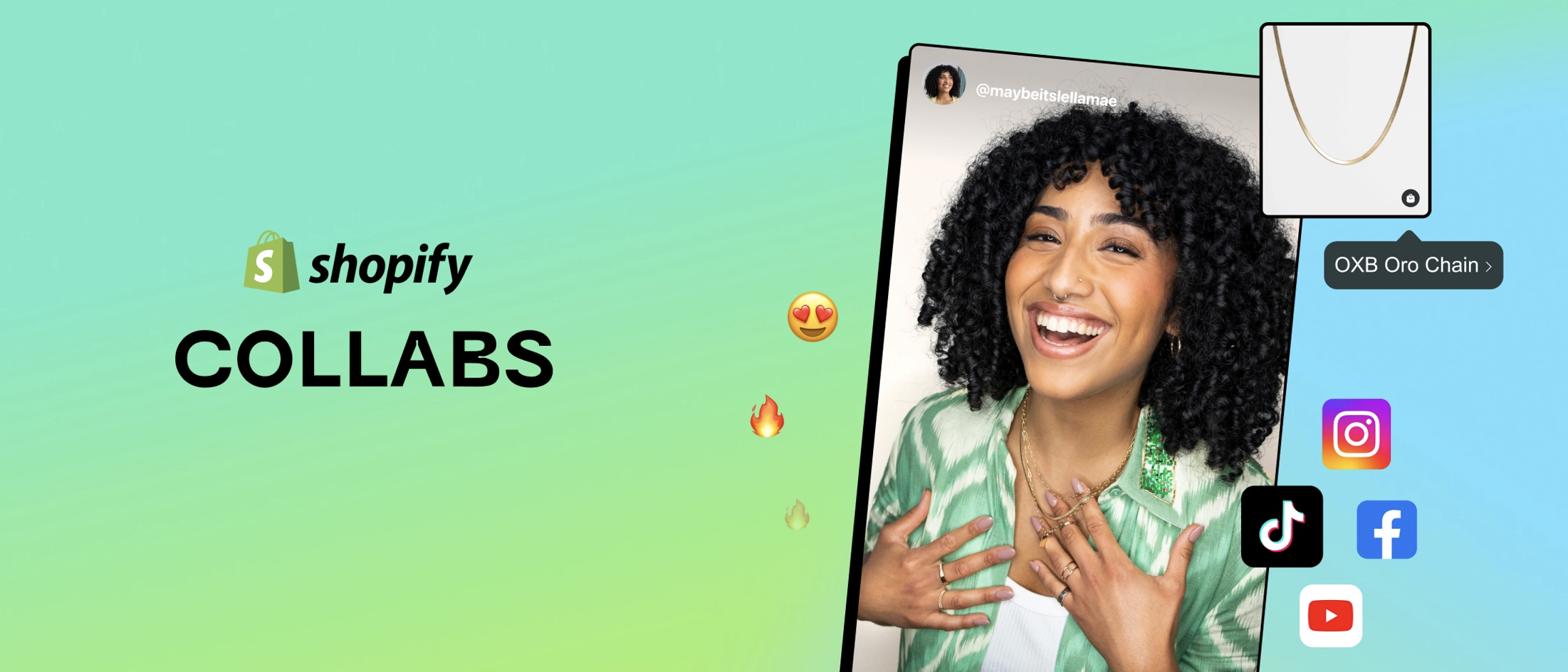
Shopify announced a new Shopify Collabs on its platform, allowing creators to connect with merchants and give them a new way to make money. 

How to get started? First, creators need to apply for an account to be able to browse for merchants that align with their audience. Once they find a brand, a partnership can be created in order to list the products to share on social media via Linkpop. If someone purchases a product using the shared link, creators will receive a payment. 

Linkpop, which launched earlier this year, allows creators to sell products directly from their page, include important links, and launch storefronts to sell directly on their platforms where they engage with followers.

The company also offers a mobile-friendly option that can be used to share links to their communities on Instagram, Tiktok, Spotify, and other social media platforms.

Would you apply for a Collabs account? Do you think this can help independent brands?

Collabs can be a good way to make stores and products more visible, and it can also help manage relationships between creators and merchants. 

This launch is available to all merchants in USA and Canada, and they can apply for access on Shopify’s website.

We will be gathering further information about Collabs and we will let you know if creators are happy with this integration or not. Stay tuned!

About Quantikal

Quantikal is a data-driven performance marketing agency based in Buenos Aires, Argentina. We help clients scale their business through profitable digital ad spending by constantly obsessing over clients’ key metrics. Quantikal’s experience working in diverse online companies in marketing roles including media buying allows us to provide solutions in the ever-demanding increase of marketing performance, doing more with less thus becoming a strategic partner.
What the latest Search updates mean for advertisers

At their latest event, Google showcases recent Search updates that could help marketers unlock its full potential.

Google is stepping out of the traditional search box by combining new inputs and developments in computer science. From text searches to phone camera pictures and voice-overs, Google has been optimizing its search engine toward a more natural way of exploring information

Earlier this year, Google introduced multisearch. By searching images and text simultaneously, multisearch will be available in over 70 new languages in a few months’ time. 

Also, Google intends to make searching a more visual experience. Google Maps will include more immersive capabilities with 3D images using advanced computer vision. This visual approach is beneficial when it comes to shopping, where people are looking for the most accurate display of products. 

With the recent launch of landscape images available on the mobile results page, advertisers can now be more in control of how images appear, making it easier for them to get noticed and drive in more results. 

Google also mentions the addition of Business Messages, where customers will be able to message brands through Search ads. With a 30-day response window, advertisers could create relationships with customers, before and after sales. 

If you want to read more about what Google has to say about the latest Search On event, you can keep on reading here.

Google seems to be moving in a more direct and easy way of searching, leaving the infamous search box behind. This new mindset could especially help Shopping ads, but any advertisers that prefer a more visual approach will be intrigued by these potential innovations. We recommend all marketers try these out as soon as they roll out. 

As always, we will let you know when Google announces these launches officially and we’ll keep an eye out for any new features coming your way. Stay tuned!

About Quantikal

Quantikal is a data-driven performance marketing agency based in Buenos Aires, Argentina. We help clients scale their business through profitable digital ad spending by constantly obsessing over clients’ key metrics. Quantikal’s experience working in diverse online companies in marketing roles including media buying allows us to provide solutions in the ever-demanding increase of marketing performance, doing more with less thus becoming a strategic partner.
YouTube is now testing a Promotions Tab

If you want to learn more about this new feature, keep on reading.

YouTube is now letting creators promote their channel and content without going through Google Ads Manager. This is being tested with a limited number of users.

This new tab will be found in YouTube Studio, so if you have access to this new tool, you may see the tab in the Promotions section on YouTube Studio’s Content page.

Adding a Promotions tab will allow creators to be their own content managers, running quicker promotions for their videos and encouraging channel growth. This way, those who didn’t have the knowledge to run their own channel promotions will now be able to do so more efficiently. Although creators will not have to go through Google Ads, YouTube is funneling more ad revenue. 

Although most advertisers would stick to the Google Ads method, there are some experienced creators that can also use the Promotions tab.

What will you do? Would you migrate toward this new Promotions tab? Let us know in the comments below.

As usual, we advise new creators to proceed with caution and start out with a small budget before scaling to bigger numbers. By learning Google Ads’ best ways to go, you will be developing more skills to properly test your promotions. 

Quantikal will be looking out for any more updates that are worth communicating, so stay tuned!

About Quantikal

Quantikal is a data-driven performance marketing agency based in Buenos Aires, Argentina. We help clients scale their business through profitable digital ad spending by constantly obsessing over clients’ key metrics. Quantikal’s experience working in diverse online companies in marketing roles including media buying allows us to provide solutions in the ever-demanding increase of marketing performance, doing more with less thus becoming a strategic partner.
Microsoft announces new updates

If you want to know more details about Microsoft’s announcement, keep on reading

Microsoft announced new updates on its blog, including vertical-based ads, Automotive ads, Customer Match enhancements, and more. These features should be rolling out in these upcoming weeks across US markets.

Vertical-based ads: these types of ads appear in different formats depending on the user’s search intent. Microsoft’s AI uses the data feed to source the needed information to display in the ad. Now, Microsoft claims that this new format will shorten the time span and resources required to set up these campaigns. 

Automotive Ads: these will be unique to the automobile industry. Microsoft’s format will display a picture of the vehicle along with its main details and a brief product description. These ads will be shown mainly in the Asia Pacific and Latin American markets, after successfully testing in North America and Europe. 

Customer Match: Microsoft announced that Customer Match will be available in new markets. If you are using a Customer Data platform, you can connect it to Microsoft Advertising and import your customer lists. This integration includes Ampertiy and Adobe Ad Cloud, but further integrations will be available soon. 

What does Microsoft mean by “new audiences”? In-market audiences are now available in 20+ new Latin American countries, 10+ countries in the Asia Pacific region, and piloting new markets in France, Germany, Italy, the Netherlands, New Zealand, and Singapore. 

Reminder: Microsoft also added a warning for advertisers regarding the end of Expanded Text Ads. In September, the only search ad type that can be created will be Responsive Search Ads (RSA), as we’ve already seen with Google Ads this past June. 

Our Take

Once again, Microsoft is finally trying to keep up with Google and Facebook’s pace. It is always a good thing for search engines to release features and updates that give marketers more control over their ads. However, we were intrigued by the announcement of the new Automotive format, since Google tried to implement this in the past, and failed. Will this be Microsoft’s advantage? If the biggest search engine couldn’t pull it off, it should be interesting to see how Microsoft plans to win this battle.

As expected, we will see these updates in the near future and we’ll let you know if anything catches our eye. Stay tuned!

About Quantikal

Quantikal is a data-driven performance marketing agency based in Buenos Aires, Argentina. We help clients scale their business through profitable digital ad spending by constantly obsessing over clients’ key metrics. Quantikal’s experience working in diverse online companies in marketing roles including media buying allows us to provide solutions in the ever-demanding increase of marketing performance, doing more with less thus becoming a strategic partner.

Upgraded YouTube shopping tab: new Shopify integration

If you want to learn about this new alliance, keep on reading

YouTube recently announced new shopping features to its platform given the recent integration with Shopify. Now, creators will be able to link their store to their own YouTube channel so that users can complete purchases without leaving the platform.

It looks pretty straightforward: in YouTube Studio, with the monetization tab, creators can add their Shopify account through the Shopping tab. This gives advertisers more control over how their products appear across their channel. Also, YouTube enables tagging on live streams, making it easier for users to stay within the platform while having access to the product. 

Shopify has a real-time inventory syncing that will operate in YouTube’s live shop, so users will never be able to click on a product if it’s out of stock. 

Will you link your Shopify platform to YouTube Shopping? Do you think this is a good integration? Let us know in the comments below

Our Take

This is an easy way to bring products directly to your audience. Many smaller advertisers that don’t have the means to set up Google Merchant Center to its full potential, and do not typically run Shopping or Video ads will enjoy this as an imagery complement to display their products through their own YouTube channel. We can also see how YouTube is understanding the value of influencer marketing, which has proven an increase in number of conversions. It also gives influencers the opportunity to work with brands that they support or see fit for their own image. We hope this integration can help all advertisers increase sales and aid user experience.

As always, we will be following this alliance and we’ll let you know if any updates are coming your way. Stay tuned!

About Quantikal

Quantikal is a data-driven performance marketing agency based in Buenos Aires, Argentina. We help clients scale their business through profitable digital ad spending by constantly obsessing over clients’ key metrics. Quantikal’s experience working in diverse online companies in marketing roles including media buying allows us to provide solutions in the ever-demanding increase of marketing performance, doing more with less thus becoming a strategic partner.