Google AI Max Is Taking Control Away From Advertisers

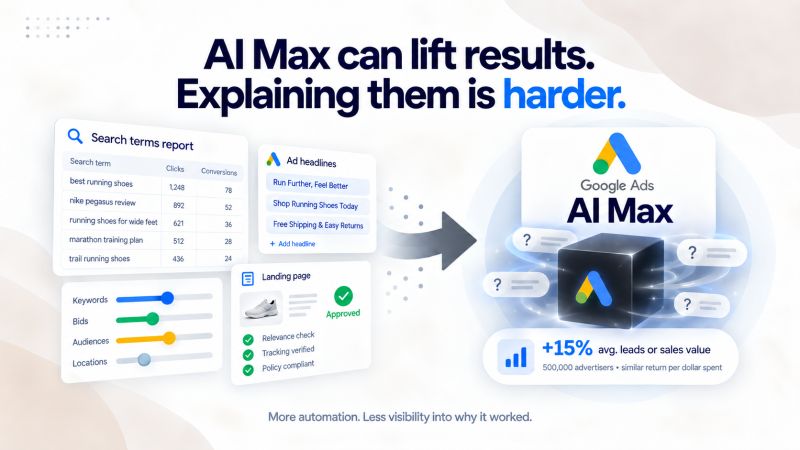
AI Max’s pitch is simple: hand Google more control, get better results. What’s a lot less clear is what exactly you’re handing over, or what to do with it once you have.

Google shared big numbers on its Q2 earnings call. AI Max is out of beta, 500,000 advertisers are on it, and Google says the average lift is 15% more leads or sales value at a similar return per dollar spent. What Google didn’t share is how that 15% is actually generated: how much comes from matching new search terms, how much from automated bidding, how much from creative combinations the system assembles on its own.

With Google advancing more and more on this direction, there’s a few cases where caution is due: 
→ A search marketer who could once open a search terms report and see exactly which queries triggered a click now gets a system that blends keyword, broad match, and AI-driven matching into one output. Harder to audit, easier to trust blindly.
→ A brand-conscious advertiser who used to approve every headline-to-landing-page combination now hands that assembly to a system that generates and tests combinations on its own
→ An in-house marketer trying to explain a lead spike to their boss, or an agency explaining one to a client, increasingly has to answer “why did this work?” with some version of “the algorithm decided”

Concretely, here’s what you’re loosening your grip on:
→ match type stops being a hard boundary, since AI Max can match a query it judges relevant even outside your keyword’s exact, phrase, or broad setting.
→ Negative keywords still block some queries, but with less certainty, since the matching logic isn’t purely keyword-text-based anymore.
→ The specific headlines and descriptions you wrote can get supplemented or recombined with AI-generated text tailored to the query, so the live ad isn’t always the copy you approved.
→ And pinning a headline or image to a fixed position carries less weight than it did in a standard responsive search ad, since the system will test combinations on its own.

What’s not resolved:
The actual levers Google gives you to influence AI Max (asset inputs, some exclusions, budget and target settings) are coarse compared to what a fully manual, keyword-based account allowed. There’s no clear public playbook for “how do I get better at AI Max” beyond “feed it more assets and trust the system.”

Google calls this the natural evolution of Search advertising. Fair enough if your team is comfortable running a system you can’t fully see inside. Less true if part of your job is explaining exactly why a campaign performed the way it did, to a client, a boss, or yourself.

If you handed AI Max more control tomorrow, could you actually tell your team why a lead came in, or would “the algorithm decided” be the honest answer?
Google is about to stop letting you pick what language your Search ads target

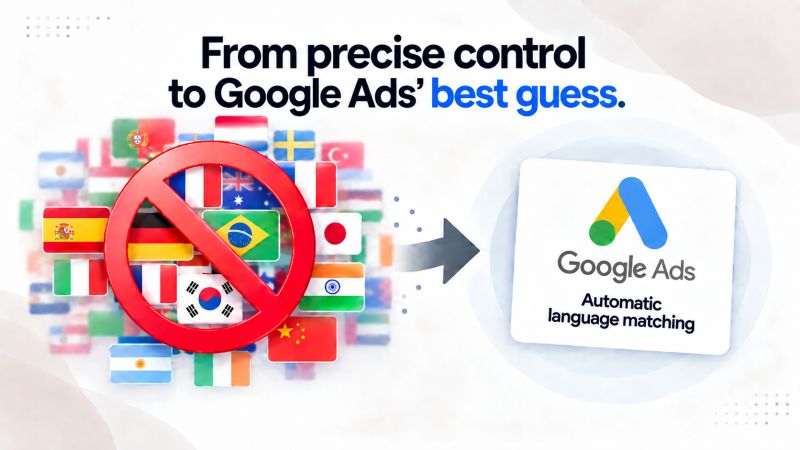
Starting late September, campaign-level language targeting disappears from Search — and, in a reversal from what Google said last year, Performance Max search placements too. No more manually telling a campaign “target Spanish” or “target French.” Google’s systems decide that on their own from here on, based on ad and landing page language, the search term, and the user’s own language settings.

Where this actually bites:
→ A US business running Spanish-language campaigns for Miami or LA
→ A Canadian brand running French campaigns for Quebec inside a national account
→ Any company chasing expats — Brazilians in Portugal, Indians in the UAE — who keep searching in their home language wherever they’ve landed

That kind of precision came from stacking a location target with a manual language setting. Take the language lever away, and Google’s automatic matching has to do that job instead — with no guarantee it draws the line where you would.

The part worth flagging: language targeting also doubled as a diagnostic tool — the way you’d sanity-check why a campaign was picking up irrelevant-language impressions. That lever is going away too. And this lands about nine months later than Google’s original December 2025 deadline, with a scope that grew to include PMax along the way.

Shopping ads are untouched, PMax still respects language setting s on YouTube, Display, Discover, and Gmail, and Google still won’t translate your ad copy — this was always matching, not translation.

The timeline:
→ August 2025: Google says removal is coming by end of 2025, Search only
→ August 14, 2026: Ginny Marvin confirms the update — PMax added, new date set
→ Late September 2026: goes live, no action required for existing campaigns

Google calls this “not a big shift,” since the setting had become redundant. Fair enough for a single-language, single-market account. Less true if reaching a language community inside a bigger market is part of your job — that’s exactly the fine-tuning this removes.

If your campaigns are built around a specific language audience — diaspora, expats, a bilingual local market — are you testing what automatic matching actually catches before this goes live, or finding out after?

If you run Local Services Ads, your dashboard is about to disappear.

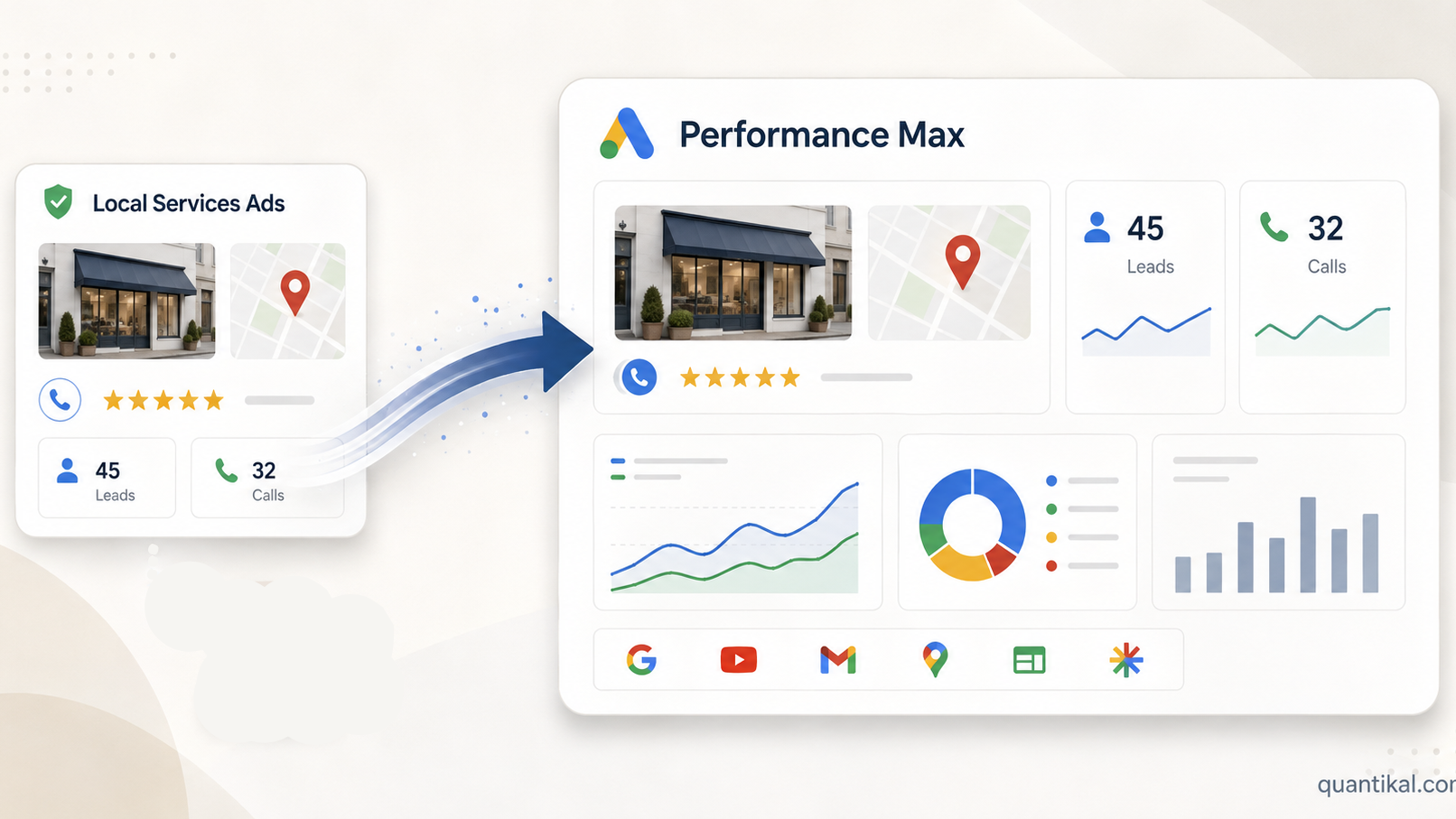
Starting this month, LSAs move out of their standalone dashboard and into a new “Performance Max for pay-per-lead” campaign type. If you run local services, this is worth knowing before it happens to your account.

What stays the same:

→ Ads only show on Search and Maps

→ Still keywordless, driven by your Google Business Profile

→ Still pay-per-lead, not pay-per-click

What’s new:

→ One dashboard for campaigns, leads, and calls instead of a separate LSA interface

→ Your Google Business Profile updates sync to your ads automatically

The part worth flagging: your historical performance data does not migrate with you. If you’ve been running LSAs and want to keep that reporting history, you’ll need to export it before your account transitions.

The timeline depends on your account, but broadly:
→ August 2026: U.S. home and storefront service businesses started migrating
→ Late 2026: Broader U.S. advertiser groups follow, including service-area businesses
→ 2027: The transition expands to non-U.S. accounts and remaining categories

Another Google product getting pulled into the same unified dashboard. 

The dashboard gets simpler. Just don’t forget to export your data before your account transitions.

If you’re running Local Services Ads, is anyone on your team exporting that historical data before the migration hits?

Source: https://searchengineland.com/

Search just got its biggest redesign in 25 years.

The way people search has changed, and Google answered with 4 new ad formats.

At Google Marketing Live this year, Google announced a new generation of ad formats built exclusively for AI Mode:

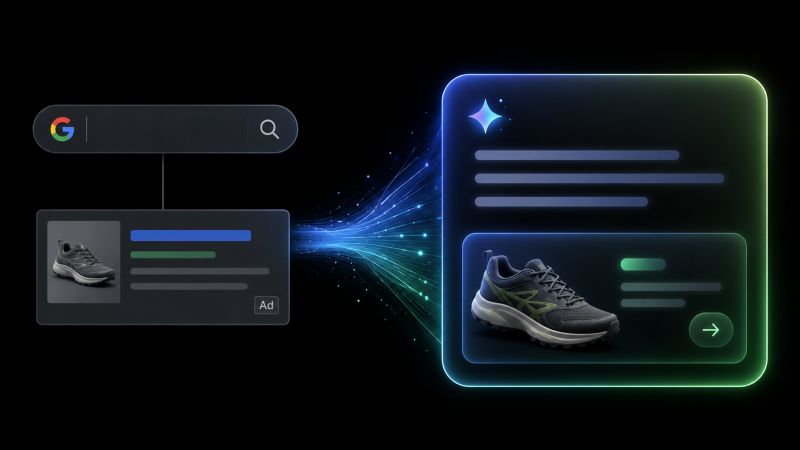
→ Conversational ads: woven into AI Mode’s response in natural language, based on your assets and brand guidelines. Not a banner. An answer.

→ Direct Offers: personalized discounts and bundles surfaced mid-conversation, at peak buying intent. Gemini builds the offer dynamically from your promotional rules.

→ AI-powered Shopping ads: Gemini-written copy that explains why that product answers the query — not just shows it.

→ Business Agent for Leads: the user asks the ad a question. The ad answers using your site content and pre-fills the contact form.

These formats exist because Search has fundamentally changed. Google made it official at GML: AI Mode now has 1B+ monthly users, searches are 3x longer than traditional queries, and usage has been doubling every quarter. The search box itself got its biggest redesign in 25 years: built for full sentences, not keyword fragments.

Google’s own words: “You can’t think in simple keywords anymore.”

One thing worth knowing: access to all of these requires AI Max or PMax, because they’re built for a different kind of search entirely. Longer queries, higher intent, conversational context. If you’re already running either, these placements are available to you now. If not, that’s the gap worth closing first.

Which of these new formats are you most excited to test?

What the latest Search updates mean for advertisers

At their latest event, Google showcases recent Search updates that could help marketers unlock its full potential.

Google is stepping out of the traditional search box by combining new inputs and developments in computer science. From text searches to phone camera pictures and voice-overs, Google has been optimizing its search engine toward a more natural way of exploring information. 

Earlier this year, Google introduced multisearch. By searching images and text simultaneously, multisearch will be available in over 70 new languages in a few months’ time. 

Also, Google intends to make searching a more visual experience. Google Maps will include more immersive capabilities with 3D images using advanced computer vision. This visual approach is beneficial when it comes to shopping, where people are looking for the most accurate display of products. 

With the recent launch of landscape images available on the mobile results page, advertisers can now be more in control of how images appear, making it easier for them to get noticed and drive in more results. 

Google also mentions the addition of Business Messages, where customers will be able to message brands through Search ads. With a 30-day response window, advertisers could create relationships with customers, before and after sales. 

If you want to read more about what Google has to say about the latest Search On event, you can keep on reading here.

Google seems to be moving in a more direct and easy way of searching, leaving the infamous search box behind. This new mindset could especially help Shopping ads, but any advertisers that prefer a more visual approach will be intrigued by these potential innovations. We recommend all marketers try these out as soon as they roll out. 

As always, we will let you know when Google announces these launches officially and we’ll keep an eye out for any new features coming your way. Stay tuned!

About Quantikal

Quantikal is a data-driven performance marketing agency based in Buenos Aires, Argentina. We help clients scale their business through profitable digital ad spending by constantly obsessing over clients’ key metrics. Quantikal’s experience working in diverse online companies in marketing roles including media buying allows us to provide solutions in the ever-demanding increase of marketing performance, doing more with less thus becoming a strategic partner.

New features for Discovery Ads

Better ad experience, creative support, new insights, and more. Keep on reading to find out!

Google is launching new features for Discovery ads to help keep audiences engaged with your ads. The new features include better ad experiences, improved creative support, new insights, and enhanced campaign management.  

Let’s be honest: the feature that caught our eye is the new audience insights and management. Now, advertisers can create and reuse audiences across all your campaigns using a new audience builder, Google Ads Editor, and API for managing large campaigns. 

Also, the insights page can give you more data about those segments that have the biggest interaction with your ad. Using asset reporting and optimized targeting, advertisers can view performance and compare between assets to decide which ones are worth turning off, editing, or changing. 

What does Google mean by “improved creative support”? When creating the ad, advertisers will be able to see quick recommendations on ratios, headlines, and text overlays for images. This will also include feedback on your ad strength and an optimization score with further guidance. Feedback rating will go from “poor” to “excellent” so that you can figure out what is in need of improvement. 

With all this being said, Google says that they will be focusing on the Gmail user experience. They aim to build a browseable Social and Promotions tab that will include more details, with images and prices. How? Google will use its machine learning algorithm to target audiences at the proper time.

Lucky for you, we include the link to the official announcement here, in case you want to read the full official statement. 

Our Take

Although these are not jaw-dropping features, it is always a good addition if it means more tools and creative opportunities to help advertisers properly showcase their brand. It is nice to see them put in the work to perfect their ad platforms and user experience, especially if it makes it simpler for users to browse. However, we recommend you test these features before applying and have a defined audience or segment in mind so that these assets can work their best. 

As expected, we will review these specific features and let you know if anything new is coming your way. Stay tuned!

About Quantikal

Quantikal is a data-driven performance marketing agency based in Buenos Aires, Argentina. We help clients scale their business through profitable digital ad spending by constantly obsessing over clients’ key metrics. Quantikal’s experience working in diverse online companies in marketing roles including media buying allows us to provide solutions in the ever-demanding increase of marketing performance, doing more with less thus becoming a strategic partner.

Google automatically updates Smart Shopping to Performance Max

Google is eliminating Smart Shopping campaigns for good. If you want to know how and when, keep on reading.

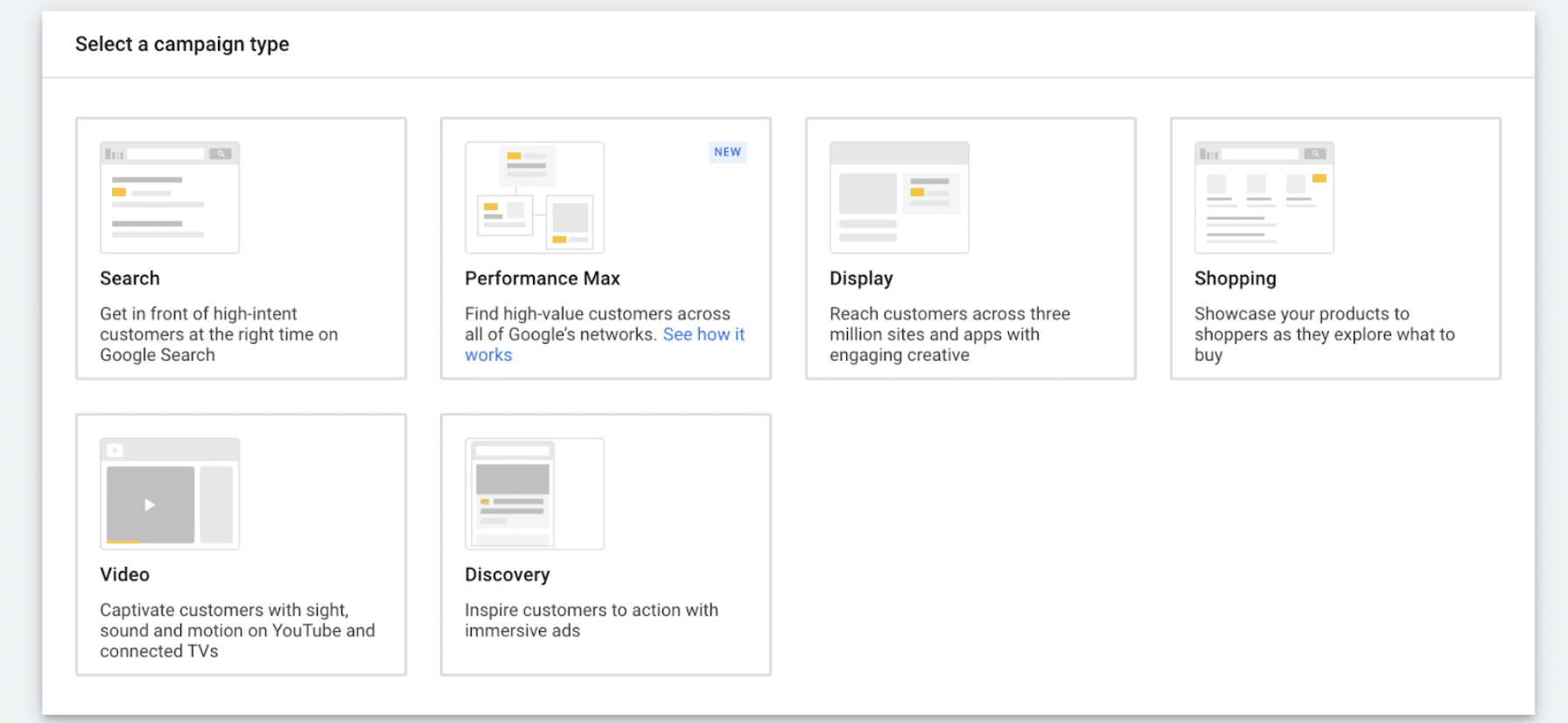
Google is now automatically updating Smart Shopping campaigns into Performance Max. Although this is something Google has been anticipating for a while, updates will be fully out in September. 

What does this mean? Google will self-update from your previous Smart Shopping campaign to Performance Max, which will include your previous learnings, budgets, and campaign settings. 

If you don’t want Google to update your campaign without your knowledge, it is best if you do it yourself with the “one-click” tool ASAP, before Google decides to take matters into its own hands and update everything automatically. 

What do you think about Google’s automatic update setting? Did it take you by surprise? Let us know in the comments below.

If you want to read Google’s official statement, click here for further information. 

Our Take

It is no surprise that Google is terminating Smart Shopping campaigns and transforming them into Performance Max. It has been clear all along that automation was the next step, so this automatic upgrade was expected. However, you can be caught off guard when you open your Google Ads account after the update is complete, especially if you never used the “one-click” button and Google simply decided to do this on its own. 

Some advertisers were worried that, with this automatic update, the campaign’s history and previous performance number wouldn’t carry on. Yet, you can view the campaign’s data history by selecting “View Smart Shopping campaign data”. We can vouch for that.

We suggest you take control of your own updates and use the “one-click” button to avoid any morning surprises. It is best to update these campaigns yourself by the end of the month so that you adjust easily to new Performance Max settings at your own pace. 

As always, we will be assessing these new Performance Max settings and we’ll let you know if any issues are worth reporting. Stay tuned!

About Quantikal

Quantikal is a data-driven performance marketing agency based in Buenos Aires, Argentina. We help clients scale their business through profitable digital ad spending by constantly obsessing over clients’ key metrics. Quantikal’s experience working in diverse online companies in marketing roles including media buying allows us to provide solutions in the ever-demanding increase of marketing performance, doing more with less thus becoming a strategic partner.

Google Launches Ad Creative Studio

Read all about Google’s feature for new ways of creating ads

Ad Creative Studio is now available! Google announces this new launch that allows advertisers to customize videos and display ads. 

Last year, Google rolled out its beta version, aiming to change ads for multiple audiences, user demographics, languages or contexts.

Now, Google allows you to export images from the asset library to the Google Ads library, so when putting creatives together, advertisers will easily find the images they want to use. To make these changes, you have to select the ones you want to make effective and provide different versions of that particular element.

What about Campaign Manager 360? Google now allows advertisers to connect their Ad Creative Studio account to Campaign Manager. As this feature rolls out, marketers can upload, manage and report creatives with these two platforms intertwined. 

Do you think this will be beneficial for creative teams? Will it be quicker than having to build new ad sets with different audiences? Let us know in the comments below.

According to Google, brands that have already tried ACS out, like General Motors, claim to have reduced costs by 30% and reported an increase of 56% in Google searches for a specific car model. 

Google says that ACS is “built to provide full support for creative teams and to enhance collaboration, create effectiveness and scale.”

If you want to know more Google’s announcement, don’t worry, we got you covered: read the official statement here.

So, if you have multiple audiences or want to run quick and dynamic changes without creating additional campaigns, this would be an interesting feature for you to try out. As it is fairly new, we can’t say for sure if this works better than having to create new ad sets, but it is a catchy update for visual creators.  

As always, we will be on top of this new feature and we’ll let you know if it is as effective as Google claims it will be. Stay tuned!

About Quantikal

Quantikal is a data-driven performance marketing agency based in Buenos Aires, Argentina. We help clients scale their business through profitable digital ad spending by constantly obsessing over clients’ key metrics. Quantikal’s experience working in diverse online companies in marketing roles including media buying allows us to provide solutions in the ever-demanding increase of marketing performance, doing more with less thus becoming a strategic partner.

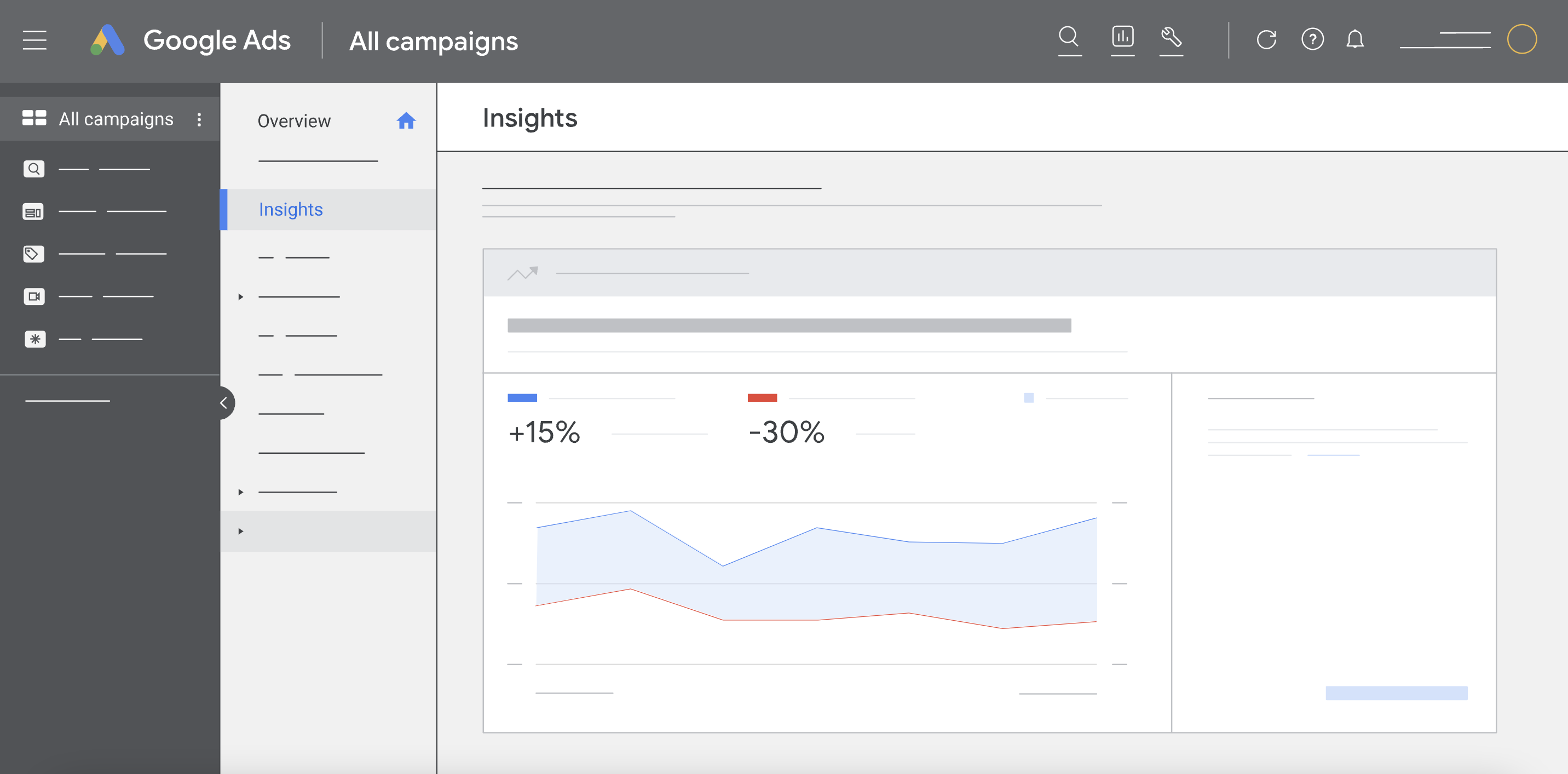
Google Ads will now run Diagnostic Insights

If you want to know more about this new diagnostics tool, keep on reading.

Google is launching a new format on the Insights and Overview page called Diagnostic Insights. This data will identify issues in your campaigns when running diagnostic checks.

Diagnostic Insights will show issues in Performance Max campaigns, only when it is not receiving conversions or traffic. So, if users click on your ad and view it, no problems will be reported. Even though this is currently a beta version, Google is trying to roll out these insights to randomly chosen accounts, but with limited access. 

What will Google show on the diagnostics report? These are the insights:

  • Ad strength
  • Campaign budget
  • Campaign status
  • Account status
  • Billing status
  • Bidding strategy
  • Conversion tracking

Do you think this data insight is enough? What else would you add? Let us know in the comments below.

After Google runs its diagnostic check, you will be provided with a list of recommendations on how to fix the issues in your campaigns so they can perform at their best.

There is no official launch date for this Insights update, but we can expect that it will be coming out soon. 

Our Take

We are always thankful for more data and more insights available for the advertiser. So, in a way, Google is giving us more information about what is going on after we place the ad, including the negative issues. We have yet to see if the list of recommendations will be useful or if Google’s advice is just to “keep on spending”. Our eyes are wide open…

As expected, we will be paying close attention to this new update and its launch date, so we can let you know if it can actually help your campaigns. Stay tuned!

About Quantikal

Quantikal is a data-driven performance marketing agency based in Buenos Aires, Argentina. We help clients scale their business through profitable digital ad spending by constantly obsessing over clients’ key metrics. Quantikal’s experience working in diverse online companies in marketing roles including media buying allows us to provide solutions in the ever-demanding increase of marketing performance, doing more with less thus becoming a strategic partner.

Updates in Google’s Audience Manager

Google Ads has been redefining Audiences with more updates and tracking tools. Keep on reading if you want to know more.

With Google’s new updates, the “audience” now has its own category, including several types of targeting. What used to be “audience lists, insights, and sources” is now Audience Manager. 

Within Audience Manager, Google organized the platform into four main categories: Audiences, Segments, Your Data Insights, and Your Data Sources. 

The “Segments” category includes:

  • Your data: people that interacted with your business beforehand.
  • Custom segments: people based on search history, apps, and visited sites.
  • Combined (interests and demographics): people based on their life events, location, and interests.

With this last feature, advertisers can narrow down and exclude users by demographic characteristics. Audiences can be cut-off by age, gender, parental status, income, etc., which looks helpful at first glance. This can be applied to various ad groups which may save time and help your targeting.  

Are you already using Audience Manager? Do you find it easier to work with? Let us know in the comments below.

However, there are some key points to keep in mind when you apply new audiences to your campaigns. 

If you add a new segment today, you won’t have any performance data from the past. Google’s metrics will only be available moving forward. Also, Audience Manager doesn’t show how your targeting performs, so you have to review these metrics within your ad group where it applied. 

We suggest all advertisers test Audience Manager and learn about segments and sources. This way, you can rest assured that your ad is reaching the right market and your insights may lead to new customers.  

As always, we will learn about this expanded category and we’ll let you know if anything catches our eye. Stay tuned!

About Quantikal

Quantikal is a data-driven performance marketing agency based in Buenos Aires, Argentina. We help clients scale their business through profitable digital ad spending by constantly obsessing over clients’ key metrics. Quantikal’s experience working in diverse online companies in marketing roles including media buying allows us to provide solutions in the ever-demanding increase of marketing performance, doing more with less thus becoming a strategic partner.